
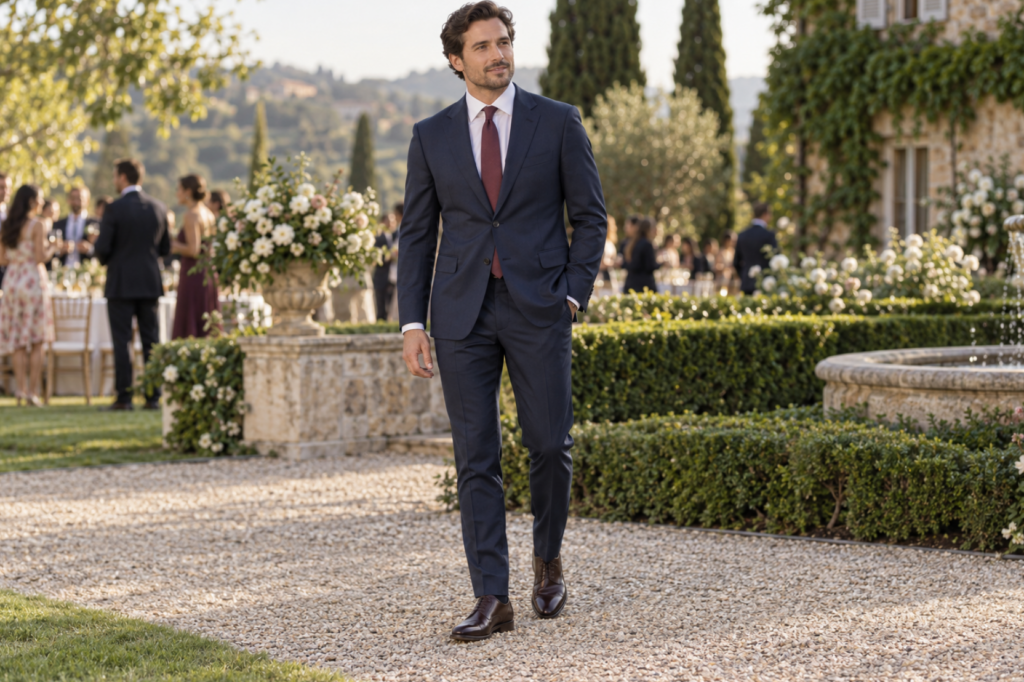
For many weddings that call for a suit, navy or charcoal paired with a dress shirt, tie, and polished shoes is a dependable choice. However, the invitation comes first: black tie generally calls for a tuxedo, while a relaxed daytime wedding may allow lighter colors and less formal styling.
Choosing a wedding outfit becomes easier when you answer three questions: How formal is the celebration? Where will it take place? What weather should you prepare for?
This guide focuses on wedding guests. If you are the groom, a groomsman, or part of the ceremony, confirm your outfit with the couple before choosing independently.
Start With the Wedding Dress Code
The dress code sets the formality of your outfit. Season and venue help refine that choice, but they should not override an explicit request.
Check the invitation and wedding website first. If the wording remains unclear, ask the couple or their designated contact well before the wedding.
| Dress code | Suggested outfit | Key consideration |
| Black tie | Tuxedo, formal shirt, bow tie, formal shoes | A regular black suit is not equivalent to a tuxedo |
| Black tie optional | Tuxedo or dark suit with a dress shirt and tie | Keep the complete outfit formal |
| Formal | Usually a dark suit and tie; clarify specific expectations | Meaning can vary by host and region |
| Cocktail | Tailored suit, dress shirt, polished shoes, usually a tie | Add personality through restrained accessories |
| Semi-formal | Suit appropriate to the time and setting | Avoid assuming this means casual |
| Dressy casual | Blazer and tailored trousers, or a relaxed suit | Follow the host’s examples if supplied |
These are common Western wedding conventions. Cultural traditions and the couple’s instructions may call for different clothing.
What if the invitation says black tie?
Choose a tuxedo with suitable formal accessories. A tuxedo typically has contrasting lapel facings and other eveningwear details that distinguish it from an everyday suit. Simply adding a bow tie to a business suit does not create the same outfit.
For black tie optional, a dark suit, white dress shirt, and conservative tie are an accepted alternative.
What Color Suit Should You Wear to a Wedding?
Navy and charcoal are versatile starting points. Light gray, tan, and softer colors can suit less formal daytime celebrations when the invitation permits them.
Navy: adaptable and easy to style
A navy suit works with white or pale blue shirts and accessories in burgundy, muted green, or understated patterns. For evening events, use darker accessories and polished shoes. For a daytime celebration, a lighter tie can soften the look.
Charcoal: understated and formal
Charcoal is useful when you want a restrained appearance. Pair it with a white shirt, a simple tie, and black leather shoes. It can also be a practical choice if you plan to wear the suit for other occasions.
Light gray or tan: relaxed daytime options
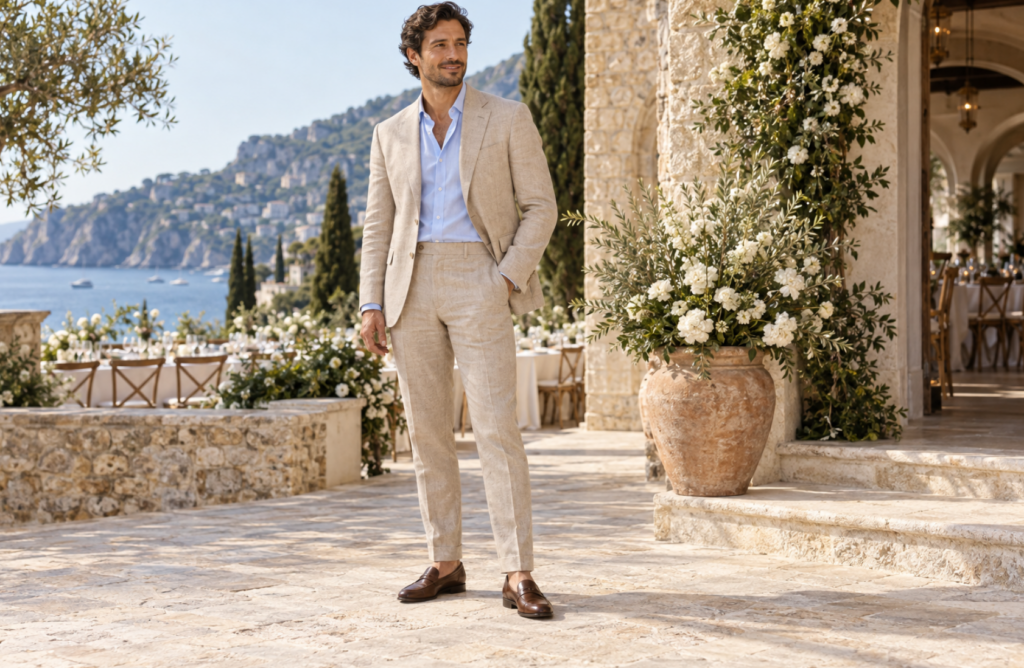
These colors can look appropriate at garden, coastal, and warm-weather weddings with a flexible dress code. Keep the shirt crisp and the footwear intentional so the outfit still feels suitable for a celebration.
Black: consider the setting
A black suit can work for an evening wedding where suits are requested. Add a white shirt and thoughtfully chosen accessories. However, remember that a black suit does not satisfy a strict black-tie request on its own.
White, ivory, and very pale suits deserve extra consideration. Unless the couple welcomes them, choose another color to avoid competing with wedding attire or conflicting with a cultural expectation.
What Suit Should You Wear in Each Season?
Choose fabric weight and construction for comfort, then select a color that fits the dress code. A pale suit is not automatically cooler than a darker one.
Spring weddings
Consider lighter wool or a breathable blend, depending on the forecast. Mid-blue and gray offer flexible styling without requiring a strongly seasonal look.
Summer weddings
Look for lightweight fabrics and a jacket construction that feels comfortable in warm conditions. Linen offers a relaxed texture, although it wrinkles visibly. Lightweight wool can provide a cleaner finish, while blends offer different balances of texture and structure.
For a relaxed daytime celebration, tan, light gray, or soft blue can work well. A formal summer evening may still call for a dark suit or tuxedo.
Check the lining, too. A heavy, fully lined jacket can feel warmer than its appearance suggests.
Autumn weddings
Navy, charcoal, olive, and brown can complement autumn settings when the dress code allows. Introduce seasonal character through a textured tie or subtle pocket square rather than making every element match.
Winter weddings
A wool suit with an appropriate overcoat is a practical starting point. Darker shades pair easily with formal shoes and evening accessories.
A three-piece suit adds another layer, but heated reception rooms can become warm. Choose clothing you can comfortably wear through the ceremony, meal, and dancing.
How Should the Venue Influence Your Suit?
Use the venue to make practical adjustments within the dress code.
For a ballroom reception, a structured suit and polished accessories fit the setting. At a garden wedding, consider footwear that remains comfortable on grass or uneven ground.
For a beach wedding, ask whether the ceremony takes place directly on sand. That detail affects shoes and trouser length. Do not assume a coastal location automatically permits shorts, sandals, or an open shirt.
For religious or cultural ceremonies, check whether particular garments, head coverings, or other customs apply. Following those instructions matters more than a general styling formula.
How Should a Wedding Suit Fit?
A wedding suit should allow you to sit, walk, and dance comfortably while maintaining a clean shape.
Start with the shoulders: the jacket should sit naturally without obvious overhang or pulling. When buttoned, the front should lie smoothly rather than forming pronounced tension lines.
Sleeves should allow a little shirt cuff to show. Trousers should sit securely at the waist, drape cleanly, and avoid excessive fabric collecting above the shoes.
Try the complete outfit together before the event. Sit down, lift your arms gently, and walk around. A suit that looks good while standing still may feel restrictive during a long reception.
Allow time for alterations. A modestly priced suit with appropriate adjustments can look more considered than an expensive one that fits poorly.
Which Shirt, Tie, and Shoes Complete the Outfit?
A white dress shirt is a simple starting point for many suit combinations. Pale blue can also work where the dress code allows a slightly softer look.
Choose a tie that complements the suit without disappearing into it. Small patterns or subtle textures provide interest without dominating photographs.
A pocket square should coordinate with the outfit; it does not need to duplicate the tie exactly.
Black leather shoes pair naturally with charcoal and black suits. Dark brown can complement navy, while lighter brown footwear can suit tan outfits at less formal daytime events.
Make sure shoes are clean, comfortable, and appropriate for the ground conditions. Wear them beforehand if they are new.
What if There Is No Dress Code?
Check the wedding website, ceremony time, and venue, then ask if necessary. These clues help, but they cannot confirm the hosts’ expectations.
If you cannot get clarification and a conventional suit seems appropriate, navy or charcoal with a dress shirt and tie provides a considered starting point. ## Frequently Asked Questions
Can I wear the same suit to several weddings?
Yes. Change the shirt, tie, or pocket square to create a different combination. Keep each outfit appropriate to that wedding’s dress code, and clean or press the suit as needed.
Can I wear a suit without a tie?
Sometimes. An open collar may suit a relaxed celebration if the hosts permit it. For formal or black-tie-optional invitations, include the expected neckwear. Ask when the wording is unclear.
Is a three-piece suit suitable for a wedding guest?
Yes, when it matches the requested formality. A waistcoat can make a suit feel more dressed up, but it does not turn a regular suit into a tuxedo.
Should I buy or rent my wedding outfit?
Consider future use, fit, and the event’s requirements. Buying can make sense for a versatile suit you expect to wear again. Renting can be practical for formalwear you rarely need. Allow time to check the fit either way.
Can I wear sneakers with a wedding suit?
Only when the couple’s dress code clearly welcomes that approach. Clean sneakers still create a more casual impression than dress shoes. For an uncertain dress code, choose appropriate leather footwear.
Should wedding guests match the wedding colors?
Usually, guests do not need to match the wedding palette unless requested. Avoid deliberately copying the wedding party’s complete outfit. Your goal is to look thoughtfully dressed while respecting the couple’s plans.